Showing posts with label research. Show all posts

20071219

Season's Musings

Somewhere in the not-so-distant past I wrote about the kinds of research happening in the world. To save you the click-through, they are:
  • R&D, leading to products
  • research, leading to inventions
  • Research, leading to discoveries
Traditionally, these are associated with some kind of timeframe:


All your base are belong to us

As you might have heard, the research and innovation branch of the synergetic colossus Alcatel-Lucent has now become part of the new and improved Bell Labs. Due to different processes, this creates a vector field that will influence our curve:


Before you think I imply that fundamental is the opposite of innovative, let me clarify:
  • "fundamental" stresses the long term benefits of dealing with general principles rather than practical application
  • "innovation" focuses on the short terms gains of the successful introduction into society of an invention.
But this is a narrow 1D view! At Bell Labs, we should strive to go beyond this; these two forces, when combined with creativity can change the topology of our output:


The message: Everything we do should and can have both short and long term gains.

After reading this, you might conclude I took too many happy pills. Should you care? No, since the most important message is yet to come ... when we perform an affine transformation to a new basis:


Merry Xmas and a Happy New Year
(or Happy Yule, Hanukkah, Eid Mubarak, Kwanzaa or Rohatsu)

20070621

Chinese Relativity Axiom 2.0

To copy a painting really well, you need to be a good painter, versed in the art. Hence, most art copycats specialize in one artist. Margins are huge. Occasionally, you become very rich.

To copy a recent CD/DVD really well, all you need is a good PC, with a state-of-the-art ripper. To make a decent buck, you invest in mass-replication hardware. Margins as slim. Occasionally, you can make a decent living (in China, anyway).

To copy a freely available scientific publication, and put your own name to it, you just have to be stupid - I guess. It will not make you rich. It will make you infamous.

For those of you that have have some time and can access the full papers, just go ahead and compare

1. Optics Express
* http://www.opticsexpress.org/abstract.cfm?id=86218
2. Journal of Physics
* http://www.iop.org/EJ/abstract/1742-6596/48/1/004


If not, just read the first and compare it to the abstract of the second. Notice anything? "Pu" indeed. So:

No matter how great your triumph or how tragic your defeat, there's a finite chance that one out of one billion Chinese will copy it without a second thought.

P.S. Meanwhile, the Institute of Physics has done the right thing (tm).

20070120

A better place ?

Intermezzo: 90 days in and counting.

I have previously mentioned my two professional passions: research and teaching. I also tried to give you some idea of the difference I see right now between my past and my future, research-wise (very little and all positive). But what about teaching? Will I Am I missing the contact with new students, these first months of the academic year? Does a bear poo [1] in the woods?

Teaching is very much part of my core. Be it an theoretical course or a practical session, it does a great job of keeping me warm and fuzzy. Wrapped in the very fabric of the field, I can reach out and connect. I have always imagined that few things are more satisfying than the development (pun intended - read the previous posts) of a course from scratch. To inspire students and give them a foundation to build on. To rise and never fall. To boldly go... Let it be clear: the opportunity to teach can make me put up with a lot (but only so much). It also forces one to keep the fundamental truths of the chosen path in mind.

The current views on higher (college, university or should that be universal) education are being twisted by strategic planning. Somehow, even the shortest introduction to a field has to have "finality" and direct application to some industrial problem when the student graduates. Value in the job market. These values are, unfortunately, not in favour of the great teachers becoming renowned higher educators. Paranoia? Maybe. Even more unfortunately, they are also not in favour of great researchers becoming great teachers. It makes them become managers. The world does not need more managers.

Recently, someone asked me why people with a physics background seemed to fit into the telecom world so easily, no matter what their original field. Helloooooo ? In the spirit of the great Balmer, all together now

Fundamentals, fundamentals, fundamentals, fundamentals, fundamentals, ...

Let this be a plea to all the teachers in higher education: teach the truths, not the worn down tracks ! End of idealistic rant (who needs coherence in a blog post anyway?).

[1] More about about poo/Poo/Pu in a later post.

20061024

Fundamentalism


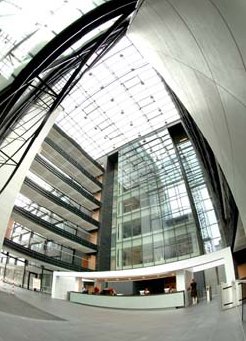
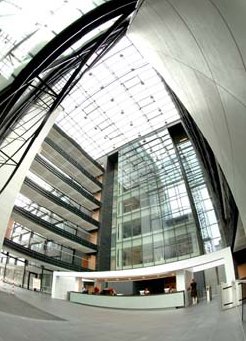
The previous installment might have been a bit dry to your taste (as descriptions are wont to be). You got the message: I have my new building (sorry, couldn't resist). Promises, promises... In any case, I hope to have give you some idea of my time and space allotment - what about the rest of the framework?

State of the system


To understand how I feel right now, you need to hear my take on the entire fundamental/basic/strategic/applied/industrial research situation. Short version: I think the impulse give by the different authorities has caused academic departments to overshoot the intended mark (welcome, mixed metaphoric friends).

Postulates


When I started at the VUB, I was passionate about two things: research and teaching. I had no clue at that time that there were "different" kinds of research (the eternal sunshine of the spotless mind):

  • fundamental
  • basic
  • strategic
  • basic strategic
  • applied
  • industrial

all in contrast to development. Notwithstanding all the subcategories, I have realized that this is true: either you are doing research or you are doing development. The big players in industry have understood this and it can be noticed in the subtle change in naming from R&D to R&I (innovation); development has been moved to were it belongs, the product groups, and innovation to the CTO (to understand the main reasons: read Christensen, Clayton M. (1997). The Innovator's Dilemma. Harvard Business School Press. ISBN 0-87584-585-1).

Unfortunately, only too often smaller companies (so called SMEs) do not make this distinction and their approach to research (pronounced [development]) is poisoning what I prefer to call Research (not pronounced [consulting]). Yes, apparently Europe wants it this way. With SMEs guiding the process. Wrong! What Europe wants is the transfer of (applicable) knowledge. Nowhere have I read that Research groups should mimic or try to behave like SMEs.

Funding organizations try to force the more basic aspects at a fundamental level by reducing the support for development a.k.a. research. Unfortunately this only causes the directors of research at academic institutions to redefine the meaning of "fundamental" and "basic". And since the experts that evaluate the proposals are often the very same that submit proposals, MUWAAAHAHAHAAAHAHAHAHA !!!

Now, I have become part of an R&I group. We do research (not Research, which is left to our academic partners) and R&D is another group, which is refreshingly and uncharacteristically honest for the private sector. If at times I stumble across something which is Research, all the better. At the very least I am not kidding myself, and nobody else is trying to kid me either. Simple litmus test:

  • development leads to products - to be sold
  • research leads to inventions - to be patented
  • Research leads do discoveries - to be celebrated

And there you have your axioms/postulates. Let me make one (1) thing clear: there are no value judgements here. But if your job is supposed to be about Research, then research is a close relative and development a distant neighbor.

Elementary, my dear Watson.

P.S. For the record: I do not believe that Research is only possible in an academic context.